Skip to product information
1 of 2

The House of Gemstones

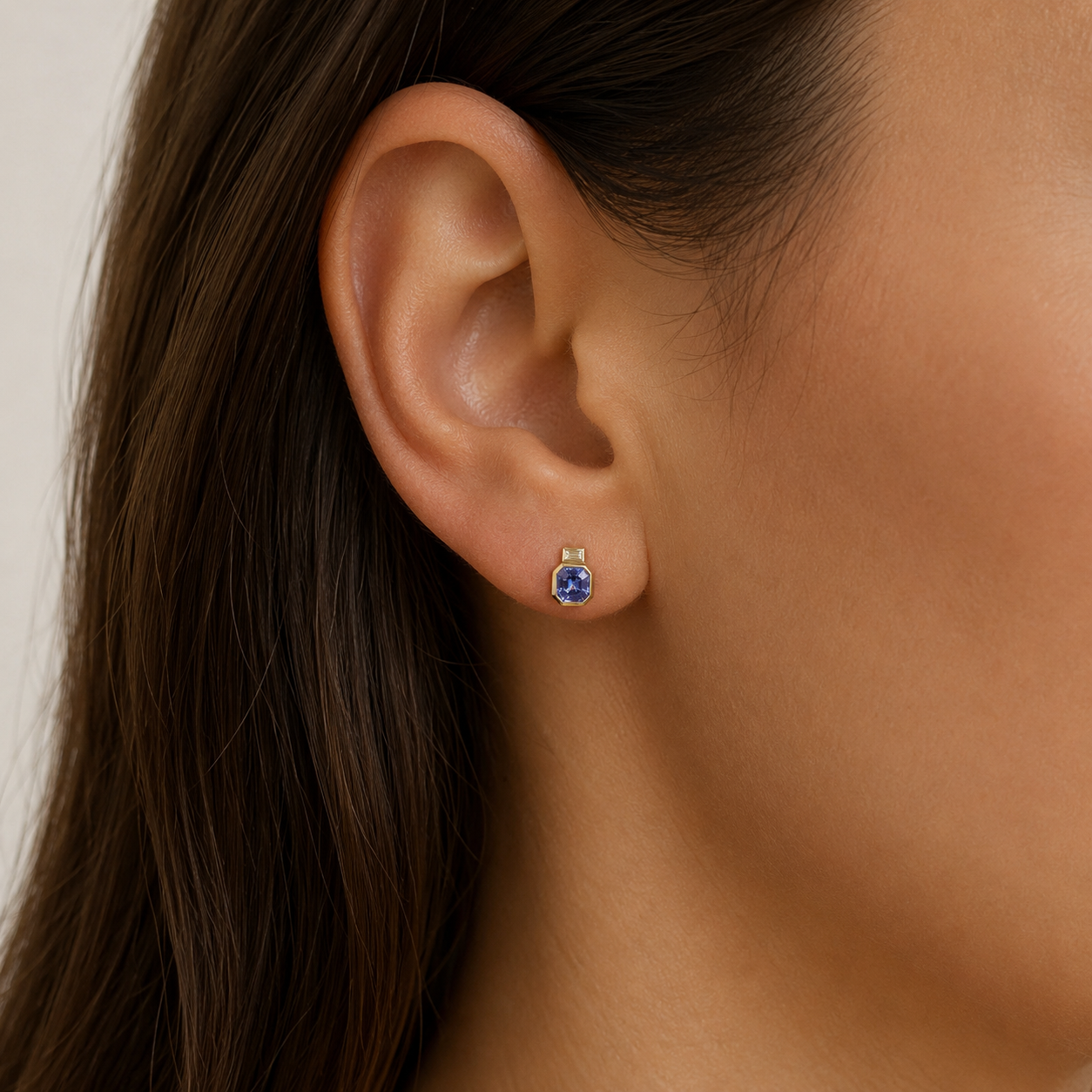
Step Cut Octagon Gemstone Earring With Rubover Diamond Top

Step Cut Octagon Gemstone Earring With Rubover Diamond Top

Regular price £1,250.00 GBP
Regular price Sale price £1,250.00 GBP
Sale Sold out
Taxes included. Shipping calculated at checkout.

Express Checkout

View full details

Marcus Tempus

Product Story

Beautifully crafted in 9ct yellow gold, these elegant drop earrings showcase a stunning pair of step-cut tanzanites complemented by sparkling emerald-cut diamonds.

The rich blue-violet tanzanites are celebrated for their exceptional colour and rarity, while the clean lines of the emerald-cut diamonds add a refined contemporary touch. Smooth rubover settings provide a sleek and modern appearance, allowing the gemstones to take centre stage while offering excellent security for everyday wear.

The warmth of yellow gold enhances the vivid tones of the tanzanites, creating a striking contrast that is both timeless and sophisticated. Whether worn for a special occasion or as an everyday statement piece, these earrings offer effortless elegance and exceptional craftsmanship.

Found exclusively in Tanzania, tanzanite is one of the world's most fascinating gemstones. Its captivating colour can display flashes of blue, violet and purple depending on the light, making every pair uniquely beautiful.

Features

  • Natural step-cut tanzanites
  • Emerald-cut diamond accents
  • Contemporary rubover settings
  • Crafted in 9ct yellow gold
  • Elegant drop design
  • Part of our House of Gemstones collection
Marcus Tempus Gemstone PassportMT-GP-012
Faceted natural tanzanite gemstone

The House of Gemstones

Tanzanite Passport

December Birthstone • Zoisite • Mohs 6–7
Mineral FamilyZoisite
Crystal SystemOrthorhombic
Hardness6–7 Mohs
ColourBlue to violet-blue
Principal SourceMerelani Hills, Tanzania
Typical TreatmentHeat treatment is common and widely accepted

Why We Treasure Tanzanite

Tanzanite is one of the modern jewellery world's most distinctive gemstones, admired for saturated blue-violet colour and remarkable pleochroism.

Its appeal is heightened by geography: gem-quality tanzanite is associated with a very small mining area in northern Tanzania.

Natural rough tanzanite crystal

Nature’s Artistry

Tanzanite is the blue-to-violet variety of zoisite and can show markedly different colours from different crystal directions.

Caring for Tanzanite

Tanzanite requires more thoughtful care than sapphire or diamond. Protect it from sharp knocks, sudden temperature changes and harsh chemicals.

Clean with lukewarm water, mild soap and a soft cloth or brush. Ultrasonic and steam cleaners are best avoided.

Understanding Tanzanite Colour

Blue, Violet and Everything Between

01

Violet-Blue

A lively balance of violet and blue, often associated with classic tanzanite appearance.

02

Blue-Violet

A stronger blue impression with violet visible in changing light or viewing direction.

03

Deep Blue

Richly saturated stones can appear strikingly blue while retaining a violet secondary character.

04

Lighter Tanzanite

Paler stones can show a softer lavender-blue appearance with high transparency.

Tanzanite showing pleochroic blue and violet colour

One Crystal, Several Colours

Pleochroism

Tanzanite is strongly pleochroic, meaning it can display different colours when viewed along different crystal directions.

Before heat treatment, rough material may show blue, violet and brownish or greenish tones. After heating, blue and violet usually become more visually dominant.

Natural unheated tanzanite showing blue, violet and greenish colour

Natural Colour, Untouched by Heat

Unheated Tanzanite

Not all tanzanite is heat treated. Unheated stones can retain a more complex natural palette, sometimes showing blue, violet, greenish, brownish or greyish tones depending on crystal orientation and lighting.

This naturally varied appearance is increasingly appreciated in jewellery, particularly by customers drawn to gemstones with unusual colour and individual character.

Unheated does not automatically mean more valuable. Colour, transparency, cut, size and the overall beauty of the individual gemstone remain important.

Understanding Treatment

Heat Treatment

Heat treatment is extremely common in tanzanite and is used to reduce brownish or greenish components and emphasise the blue-violet colours for which the gemstone is best known.

Unheated material is also used in jewellery and can be highly attractive in its own right, especially where the stone shows an unusual natural mix of blue, violet, greenish or earthy tones.

Heat treatment is widely accepted within the jewellery trade and is generally considered stable. Where treatment information is known, we believe it should be clearly disclosed.

Before Heating

Rough material may show blue, violet, brownish or greenish colour components.

After Heating

Blue and violet tones usually become the dominant visible colours.

Stable Colour

Properly heat-treated tanzanite is generally regarded as stable under normal jewellery wear.

Care Still Matters

Avoid sudden temperature changes, steam cleaning and ultrasonic cleaning.

A Remarkably Concentrated Source

From Tanzania

Tanzanite takes its name from Tanzania and is associated with the Merelani mining area near Mount Kilimanjaro in northern Tanzania.

Unlike many gemstones found across several continents, commercially important tanzanite comes from a very restricted geographic area.

What Determines Quality?

What We Look for in Tanzanite

Colour

Strong, attractive blue-violet saturation is generally the most important visual consideration.

Clarity

Fine tanzanite is often highly transparent, so obvious inclusions can noticeably affect appearance.

Cut

Skilled orientation and cutting help reveal attractive colour while maintaining brightness and proportion.

Size

Larger stones can display deeper apparent saturation, although colour quality varies from stone to stone.

Cutting Matters

Orienting Tanzanite for Colour

Because tanzanite is pleochroic, the cutter must consider crystal orientation carefully. Different orientations can favour a bluer or more violet face-up appearance.

The finished cut should balance colour, brightness, symmetry and retained weight rather than simply maximising size.

OvalCushionEmerald CutPearRoundTrillionMarquise

Marcus Tempus Gemstone Selection

How We Select Our Tanzanite

We select tanzanite for colour, transparency, cut, brightness and overall character. We also consider whether the gemstone and setting are appropriate for the way the finished piece is likely to be worn.

Rich Blue-Violet ColourExcellent TransparencyBalanced CutAttractive OrientationAppropriate Setting

Marcus Tempus Bespoke

Crafted Around Your Preferences

Tanzanite jewellery can be created around your preferred shade, shape and precious metal. Protective setting styles can be considered for rings, while pendants and earrings offer beautiful ways to showcase larger stones.

Often Crafted In

18ct Yellow Gold18ct White Gold18ct Rose GoldPlatinum

Tanzanite Preferences

Blue-VioletViolet-BlueOvalCushionPearEmerald Cut
i

Tanzanite is softer and more cleavage-sensitive than sapphire or diamond. Some ring designs may benefit from protective settings or small design adjustments.

Enquire About Bespoke Options →

Tanzanite Questions

Frequently Asked Questions

What is tanzanite?

Tanzanite is the blue-to-violet variety of the mineral zoisite.

Where does tanzanite come from?

Commercially important tanzanite is associated with the Merelani mining area in northern Tanzania.

Is tanzanite usually heat treated?

Yes. Heat treatment is extremely common and is used to emphasise the blue-violet colour.

Can tanzanite be unheated?

Yes. Unheated tanzanite is used in jewellery and may retain blue, violet, greenish, brownish or greyish colour components depending on the individual crystal.

Is tanzanite suitable for everyday wear?

It can be worn with care, but it is more vulnerable to scratching and impact than sapphire or diamond.

Can tanzanite go in an ultrasonic cleaner?

It is safer to avoid ultrasonic and steam cleaning. Warm soapy water and gentle cleaning are preferred.

Is tanzanite a December birthstone?

Yes. Tanzanite is one of the recognised birthstones for December.

Marcus Tempus gold seal

Born in one remarkable corner of the Earth.

Its next chapter
begins with you.

The House of Gemstones